Panch Badri in Uttarakhand: Temples, Route & Travel Tips
Kajal, 1 year ago, 7 min read, 492 Views
Introduction
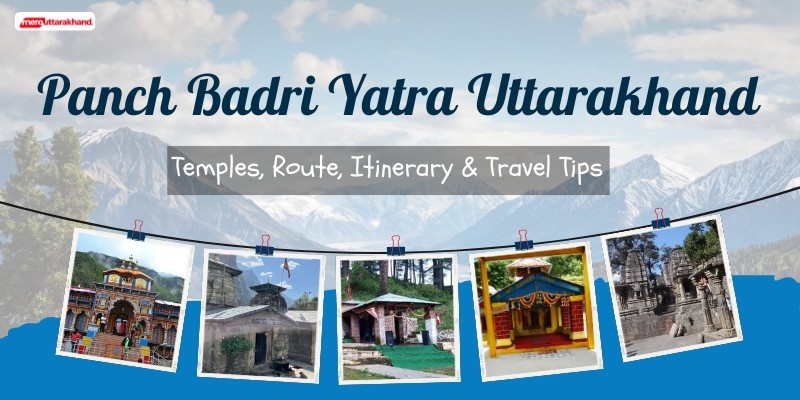
The Panch Badri pilgrimage circuit is a revered site located in Uttarakhand, India, among the towering peaks of the Garhwal Himalayas. Travelers on this spiritual tour pass through five historic temples honoring Lord Vishnu, each with its own charm and significance. The Panch Badri circuit attracts both adventure seekers and devotees with its unique combination of spirituality and adventure, from breathtaking scenery to deeply spiritual experiences. Come along with us as we go out on a quest to uncover Panch Badri’s essence.
The Story of Panch Badri
The Indian state of Uttarakhand, located in the Himalayas, is known as the “Land of the Gods,” or Devbhoomi, both domestically and internationally. In Uttarakhand’s Garhwal region, where Lord Shiva rules over the magnificent Garhwal Himalayas, this area is known as Kedarkhand in the Skanda Purana. Since Lord Vishnu arrived in this area, Vaishnav Khand in Badrikashram, in Kedar-khand, has also become a holy place for pilgrims.
According to Hindu mythology, Panch Badri was founded during the time of Mahabharata. After the Kurukshetra War, it is believed that the Pandavas looked for Lord Vishnu’s blessing on the pilgrimage as an atonement process for the sins they had committed during the war. They created five sacred temples also known as Panch Badri on their journey to honor Lord Vishnu. Below is the Panch Badri list of temples
The Panch Badri
The major and greatest pilgrimage destination in Uttarakhand, devoted to Lord Vishnu, also known as Lord Badrinath, is the Raj Badri mahal. There are, however, four other smaller Badri temples dedicated to Lord Vishnu in addition to this well-known one. Collectively, these temples are called Panch Badri. They represent the five different incarnations of Lord Badrinath.
Each year, they are visited by hundreds of Hindu devotees who consider them extremely sacred and important. Badri Vishal, located close to the principal Badrinath shrine, is especially revered by the faithful. The Panch Badri temples are explained in detail below, providing insightful knowledge about these hallowed locations. Four other auxiliary Badri temples exist in addition to the main Badrinath temple:
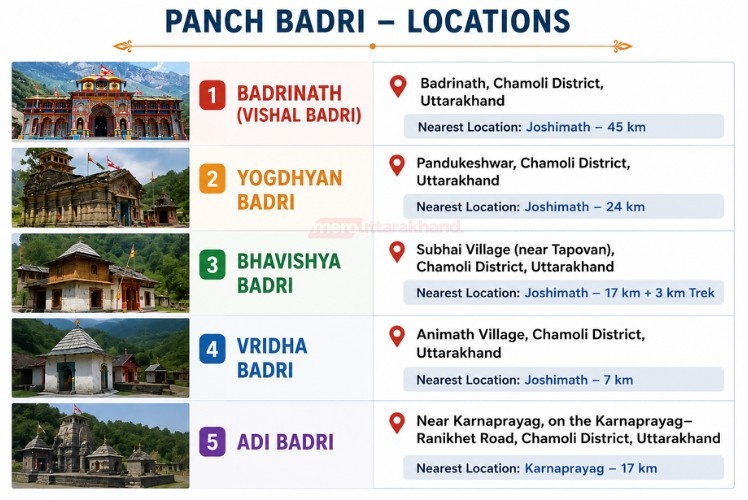
Vishal Badri – Badrinath
Located in the Chamoli District of the town bearing the temple’s name, Badrinath is one of the most significant Hindu pilgrimage sites in India. Badrinath is also a part of the Char Dham Yatra in Uttarakhand. Among the 108 Divya Desams (temples of Vishnu), this residence of Lord Vishnu is situated between the Nar and Narayana Mountain Ranges at an altitude of 3,133 meters. According to legend, Adi Shankaracharya constructed the temples in the eighth century, and several dynasties and rulers, including those of Scindia and Holkar, have periodically restored them.
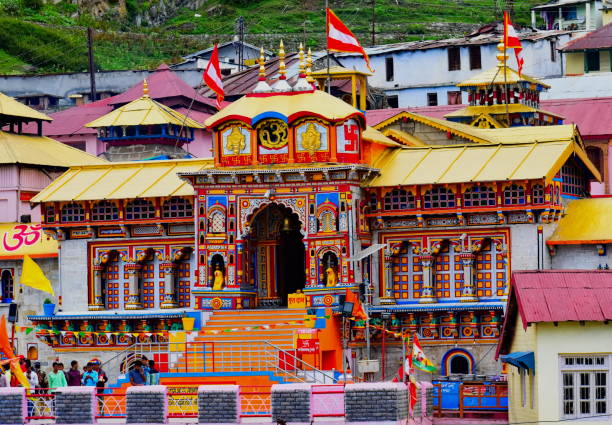
According to tradition, during Lord Vishnu’s incarnation as Nar and Narayana, he performed penance in an open space near Badrinath. It is also thought that in order to shield him from bad weather, his consort Goddess Lakshmi created a shelter for him in the shape of a tree (the Badri Tree). It is also said in mythology that the sage Narada performed an act of penance here, reciting the Ashta Akshara Mantra (Om Namo Narayanaye), a heavenly chant. As per the Hindu religious text Bhagvata Purana, Lord Vishnu has been performing the tremendous penance for the well-being of all living beings since the beginning of time.
Bhavishya Badri
Situated in the village of Subhain, outside Tapovan, this revered Vishnu shrine is located 17 miles from Joshimath. The location, as its name implies, is supposed to represent the future Badrinath, the primary Vishnu pilgrimage, when evil would manifest itself globally, obstructing the mountains of Nara and Narayana and rendering Badrinath unreachable.
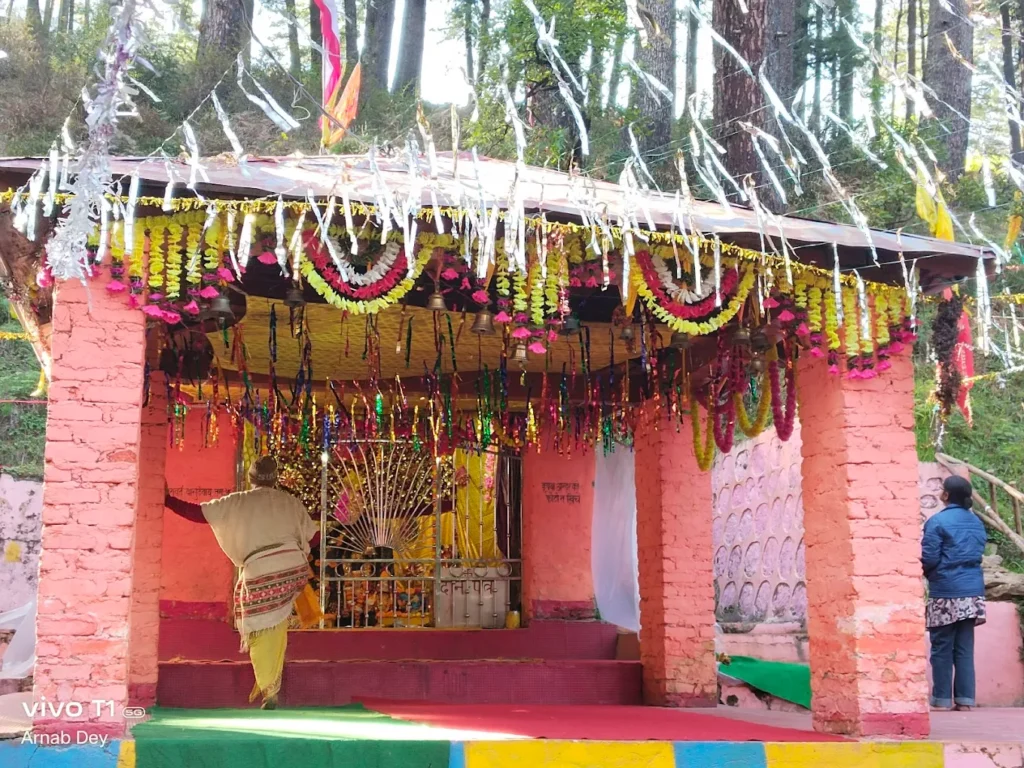
With pride, Bhavishya Badri bears the image of Narasimha, one of Lord Vishnu’s incarnations. Due to the lack of motorized highways, it is noteworthy that the temple can also be accessed on foot. Bhavishya Badri is reached by a trail those winds through a thick jungle. There are also those who think that the old path that follows the Dhauli Ganga River leads to Mount Kailash and Manasarovar itself.
The Predicted Future of Bhavishya Badri
The famed Nar and Narayan peaks, which form the backdrop of the Badrinath Dham temple, are said to collide with one another near the end of the Kalyug era, when the world is almost at its end and major ecological changes take place. This incident will obstruct the route to the Badrinath temple, making it unreachable for visitors in the future. It is believed that during this time, people will instead go to the Bhavishya Badri Dham to do rituals and make prayers.
Yogadhyan Badri
The second panch badri visiting is yogadhyan badri located at Pandukeshwar village. From the Holy Scripture, it is revealed that King Pandu, the father of Pandavas, sought redemption at this temple during his meditation. It is a peaceful and unhurried spot distinguished by calmness and sanctity. The presences of cool breezes, dense green forests, and streams of pure water envelop a visitor in this haven.
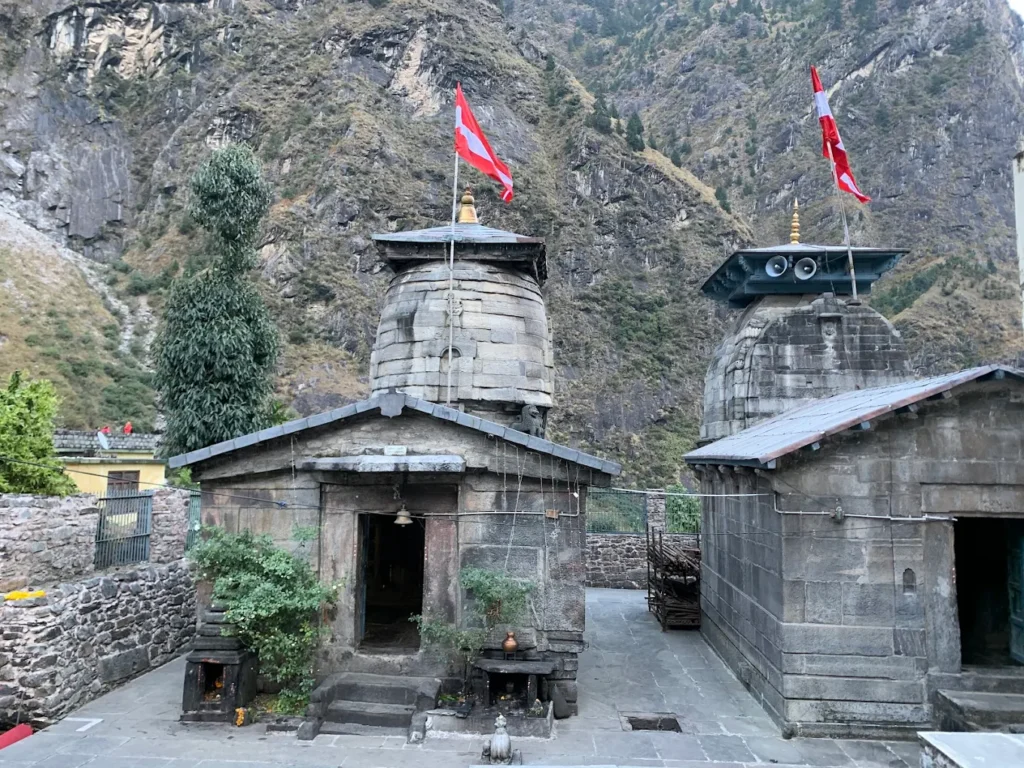
This temple is called after its presiding deity, Lord Vishnu, who looks to be profoundly engrossed in meditation. It is situated close to Hanuman Chatti and Govind Ghat. Located 1,920 meters above sea level, the village has the name Pandu, which is the Pandava brothers’ father.
The Legend of Yogdhyan Badri
As per a popular narrative, King Pandu, who was the father of the Pandava brothers, committed severe penance at Pandukeshwar to cleanse himself of the transgression of accidentally killing two deer who were ascetics in their past life. Another legend states that this temple was dedicated by King Pandu to a bronze image of Lord Vishnu in a deep state of meditation. The image is still a source of great devotion. It is thought that this is where the Pandava brothers were born, and this is also where King Pandu is supposed to have passed away.
Vridha Badri
Situated in Animath Village, only 7 kilometers away from Joshimath, is this sacred Vishnu temple along with one of Panch Badris. It is said that Lord Vishnu first appeared as an elderly man at Vridha Badri, where he was seen by the sage Narada, who performed penance there. Thus, the temple’s presiding idol also has an elderly man’s form.
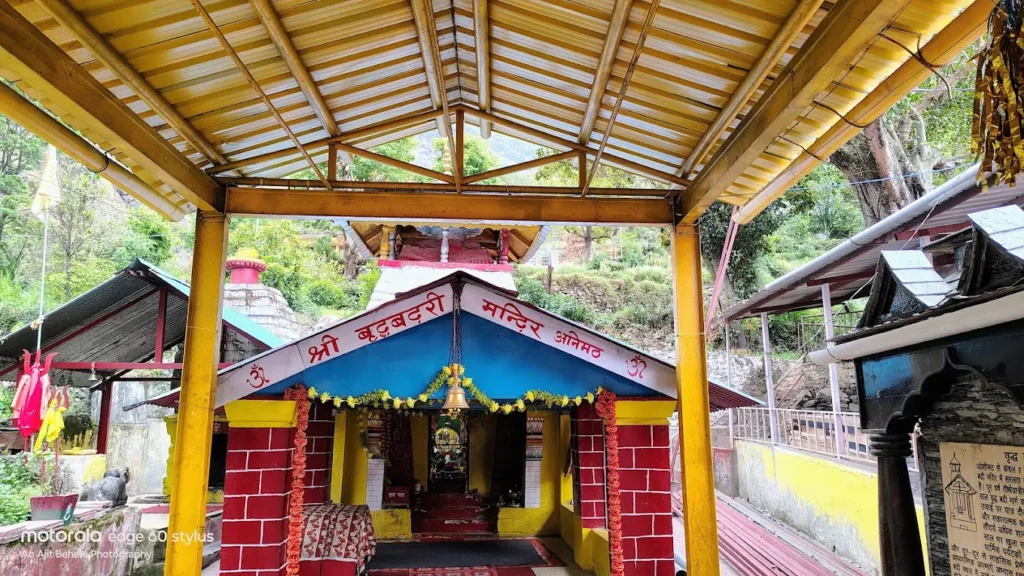
It is also thought that the idol made by Vishkarma was located in Vridha Badri and worshipped there before Badrinath was named one of the Chardhams. Additionally, this is the only Panch Badri temple that is open for pilgrimages throughout the year.
The Legend of Vridha Badri
Legend has it that the sage Narad performed severe penance in this region in order to win the lord’s favor. Lord Vishnu, looking like an old man, stood before him, impressed by his devotion. Narad made the decision to install an idol of Lord Vishnu in his old age as a sign of respect for the god. It is thought that this image was found here many years later by Adi Shankaracharya, who then restored it inside the temple premises.
Adi Badri
Situated 17 miles from Karnaprayag in Chulakot, Adi Badri is the first temple among the Panch Badri. It is claimed to be the temple where followers of Vishnu prayed while Badrinath was inaccessible in the winter. Famous Adi Shankaracharya is said to have founded the temple complex known as Adi Badri. Within the fifth and eighth centuries AD, the Gupta Rulers constructed seven of the temples that make up this complex.
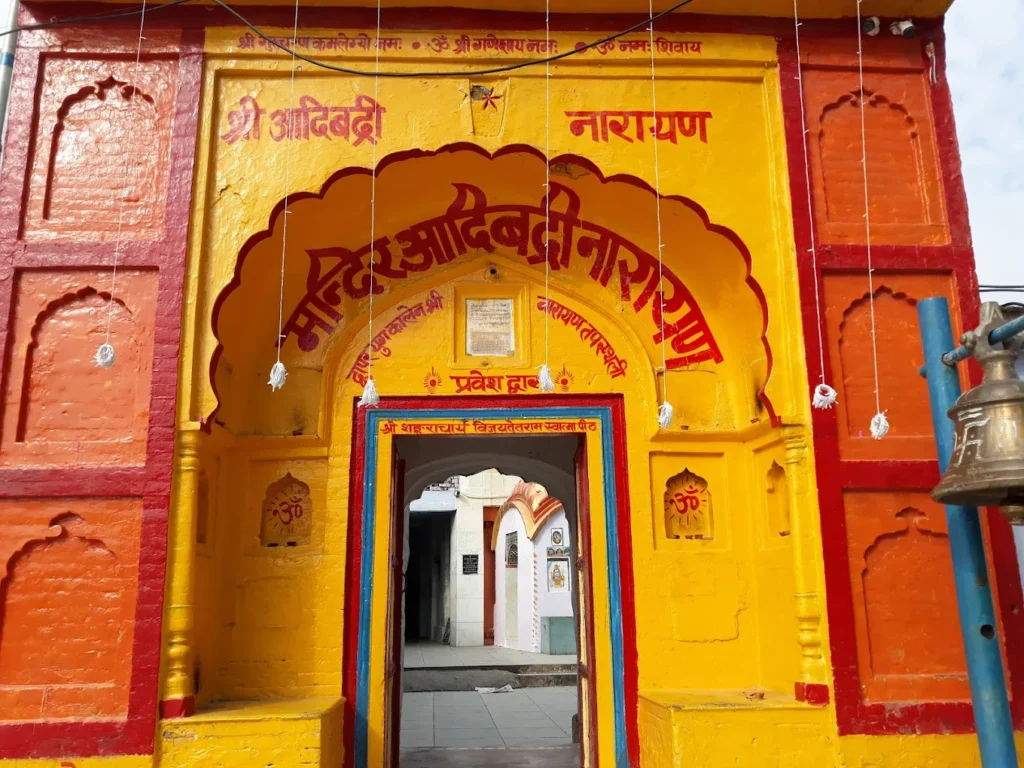
Built on an elevated platform with a modest pyramid-shaped enclosure, the complex’s primary shrine is devoted to Lord Vishnu. Vishnu is shown at the temple clutching a mace, a lotus, and a chakra in an image made of black stone. In accordance with Hindu traditions, this temple will be called Yogi Badri when Bhavishya Badri reaches the same height as Badrinath eventually.
The Legend of Adi Badri
According to legend, Lord Vishnu lived permanently in Adi Badri during the Satya, Treta, and Dvapara Yugas before moving to Badrinath during the Kali Yuga. In order to complete their religious rites, devotees frequently travel to Adi Badri when inclement weather makes it difficult for them to reach the main Badrinath Dham temple.
Why visit to Panch Badri?
Traveling the Panch Badri circuit is intended to fully be in the Himalayas spiritually rather than merely visiting temples. It is spiritually energized by God’s loving providence and grace. The journey’s provisions in deep forest hikes are filled with divine charm, just like the prayers in holy sites are aflame with spiritual emotion.
The Panch Badri pilgrimage brings about a mystical feel that enhances the bonding with the sacred, no matter your level of devotion on pilgrimage or level of daring.
Conclusion
In the end, the Panch Badri Yatra in Uttarakhand changes people’s souls – it is not just like other pilgrimages made every year. Visitors are called upon by the gods at its respected temples while they look for inner peace brought about by knowledge; even its creation beyond human understandings is to be seen as part of this knowledge.
Now gather your belongings like other pilgrims would for this unique journey; wear your boots because Panch Badri invites you to walk through Himalayas’ spiritual essence.
Related FAQs
Which are the five temples included in Panch Badri?
The five temples of Panch Badri are:
Badrinath (Vishal Badri)
Yogdhyan Badri
Bhavishya Badri
Vridha Badri
Adi Badri
Some traditions also mention other Badri temples under the broader Sapta Badri circuit, but these five are the primary Panch Badri shrines.
What is Panch Badri in Uttarakhand?
Panch Badri refers to a group of five sacred temples dedicated to Lord Vishnu in the Garhwal region of Uttarakhand. The five temples are **Badrinath Temple (Vishal Badri), Yogdhyan Badri, Bhavishya Badri, Vridha Badri, and Adi Badri. Together, they form an important pilgrimage circuit known as the Panch Badri Yatra.
What is the best time to visit Panch Badri?
The best time to visit Panch Badri is between May and October, when the weather is pleasant and most temples are accessible. Some temples, especially Badrinath and Bhavishya Badri, may remain closed or difficult to access during heavy winter snowfall.
How many days are required to complete the Panch Badri Yatra?
A complete Panch Badri Yatra usually takes 3 to 5 days, depending on the travel itinerary, weather conditions, and the time spent at each temple. Pilgrims often combine the journey with visits to Joshimath, Pandukeshwar, and other nearby religious sites.
Can all Panch Badri temples be visited by road?
Most Panch Badri temples are connected by road or are located near motorable routes. However, reaching Bhavishya Badri requires a short trek from the nearest road point, offering pilgrims a scenic Himalayan hiking experience along with spiritual exploration.

Kajal - Content Editor
Welcome to our blog! As the editor, my mission is to provide you with thoughtful, well-researched, and engaging content that educates, inspires, and provides value to your path. Each article is lovingly crafted to provide authenticity, clarity, and relevance, tackling a diverse array of topics that pique interest and provoke meaningful conversation. Our vision is to establish a platform where knowledge is exchanged, ideas thrive, and readers discover content that resonates.". Your suggestions and comments are always welcome—let's continue learning and growing together!
Fill this easy form


