Valley of Flowers Trek : A Legendary Trail
Kajal, 1 year ago, 6 min read, 218 Views
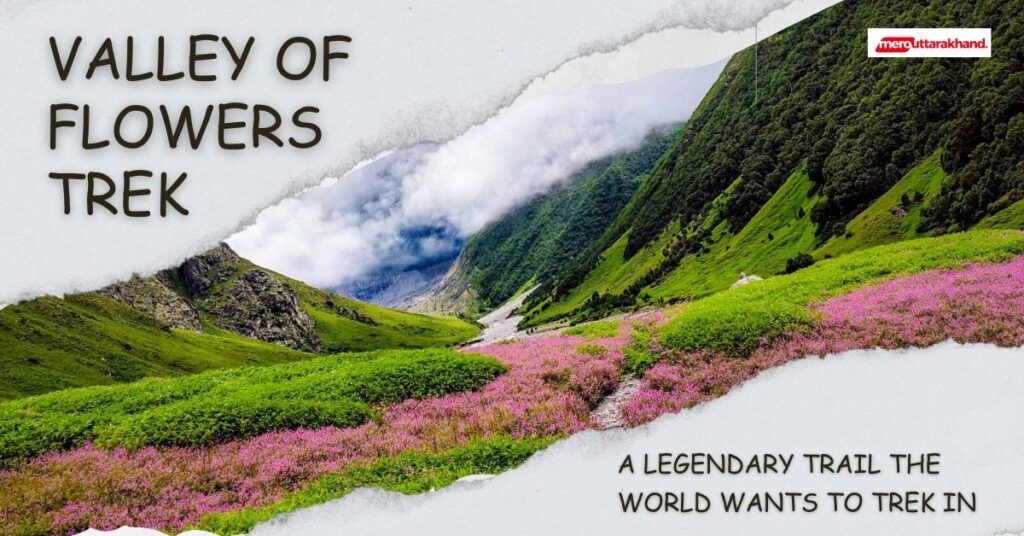
Overview of The Valley of Flowers : A World Heritage Site
The Valley of Flowers Trek was designated as a national park in 1982 and is incredibly large, with endless meadows. It is now a recognised World Heritage Site. The elevation is 12,140 feet. In case you were unaware, unique and endangered species call it home. In addition to red fox, blue sheep, brown bears, musk bears, and other bears found in Asia, high-altitude birds such as the Himalayan Monal Pheasant can be found there. It is the most well-liked Monsoon Trek in the Himalayas of Uttarakhand.
Though you will have worked tirelessly for hours, when you see the unbelievably grand and beautiful valley, your heart will skip a beat. And that is it that is it! An indescribable feeling of absolute bliss will fill your body. The long journey here and those hours spent in between would definitely come to mind. This is real magic capable of melting the stoniest of hearts.
You also like Har Ki Dun Trek
A few of the most popular flowers in Valley of Flowers
India’s Valley of Flowers is renowned for its breathtaking scenery and a myriad of colours.
- Himalayan Blue Poppy: In the valley, this flower stands out among the rest due to its deep blue petals and golden stamens.
- Himalayan Bellflower: In blue and purple shades, these bell-shaped flowers add a charming touch to the valley.
- Brahma Kamal: Such a splendid and exceptional bloom is commonly known as the “King of Himalayan Flowers”. In comparison to other blossoms found in the valley; it has an unusual shape and an unblemished white colour that makes it different from them all.
- Himalayan Cimicifuga: Due to their one-of-a-kind form and odour, these pretty little pink blooms are favoured by travellers.
- Himalayan Primrose: The valley is infused with a soft beauty from this plant’s lovely pink, purple and white flowers.
- Himalayan balsam: This flower’s colours are really bright with deep crimson and pink shades. Tourists love them, and they can be found in great numbers along the whole valley.
Combining myriad blossoms filled valley is a real haven for nature loving individuals and flower admirers alike. The beautiful colours and exquisite scents together make the visitors awestruck at this striking contrast of flowers.
About the Valley of Flowers Trek
Trekking for a few hours could be a little challenging, but once you are in the valley, everything will seem impossible. Savour the peace and quiet that permeates the valley. Observe the moon rising in the area.
At midnight, lie in the tent with your loved ones and gaze up at the stars that glisten millions of light-years distant. See the various varieties of flowers. You will be treated to a visual feast as you observe the various varieties of Himalayan flora.
It has become extremely significant and is embellished with a variety of Alpine flowers that are emblematic of the Alpine shrub and meadow ecoregion of the Western Himalayas. Additionally, the valley is endowed with a variety of flowers that, with time, have acquired a range of hues. The most well-known is Brahma Kamal, Himalayan flower, which blossoms in July and August.
Valley of Flowers Trek Route:
Usually starting from Govindghat, a small village easily reachable by road from Haridwar or Rishikesh is the Valley of Flowers trek. You will have to walk around 13 kilometres from Govindghat to the settlement of Ghangaria. The trek’s next section is an ascent of 4 kilometres to the Valley of Flowers from Ghangaria. Additionally, you can go to the Sikh pilgrimage site Hemkund Sahib, which is close to Ghangaria. From Ghangaria, it’s a further 6-kilometer hike.
The best time to visit the Valley of Flowers Trek:
The best time to enjoy trekking in Uttarakhand’s Valley of Flowers is between June and September when the valley is fully blossomed. During this season, one can find clear skies and mild temperature that suits trekking. The area becomes more beautiful and even more colourful during these monsoons since rains enhance the brightness of flowers. It is not advisable to visit this region during winters as there are lot of snowfalls which make it impossible to walk around. Thus, plan your trip during its peak flowering period to be able to appreciate the true magnificence of this floral wonderland.
Itinerary of Valley of Flowers Trek:
Day 1: Rishikesh arrival and head to Joshimath
- Start at the ISBT bus terminal in Rishikesh, where you will board the bus and go to Joshimath. The starting point and base camp for the Valley of Flowers trek is Joshimath.
- Along the way, we will see the Devprayag, Rudraprayag, Karnprayag, and Nandprayag holy sangams of the Ganga River.
- Once you get to Joshimath, check into our hotel or guesthouse, take a shower and relax for a while. You are welcome to explore this charming Himalayan town on foot as you prepare for your trip the next day. Savour a dinner prepared at home and spend the night at Joshimath.
Day 2: Joshimath to Pulna and trek to Ghangharia
- Get up early and, after breakfast, take a drive via Govindghat to get from Joshimath to Pulna Village. Along the pure Pushpavati River, we will begin our trek from Pulna towards Ghangaria, the starting point for the Valley of Flowers & Hemkund Sahib.
- Once you get to Ghangaria, check into our guesthouse or sarai, relax and then get together for a full meal. Enjoy a home-cooked meal and an overnight stay in Ghangaria in the evening.
Day 3: From Ghangaria to the Valley of Flowers and back
- After having breakfast, let’s start the journey from Ghangaria to the Valley of Flowers, and we should wake up early. The Valley of Flowers is a world heritage site known for its wild flowers surrounded by snow capped mountains.
- When you are journeying, you can enjoy watching the Laxman Waterfall as well as its surrounding hills. Observe how diverse blooming plants such as Brahmakamal, Himalayan Rose and Blue Poppies bring freshness to this environment among other beautiful things. If the sky is not cloudy, then your eyes will see their snow capped heights behind Nilgiri Parvat, Rattaban, and Gauri Parvat and so on.
- After lunch, hike down to Ghangaria from the Valley of Flowers and relax in our guesthouse/sarai. Enjoy a home-cooked meal and an overnight stay in Ghangaria in the evening.
Day 4: Ghangaria to Hemkund Sahib and back
- Once breakfast is done, we are required to rise early in the day and begin our journey from Ghangaria to the sacred Hemkund Sahib. The latter lies at an altitude of 14,100 feet and is known to be the highest Gurdwara worldwide and a significant place of pilgrimage.
- At Hemkund, the holy glacier lake should be stared at and respect to Gurdwara is offered. Under clear skies, this holy lake presents perfect reflections of the neighbouring Saptrishi peaks.
- After lunch, hike down to Ghangaria from Hemkund Sahib and relax in our guesthouse/sarai. Enjoy a home-cooked meal and an overnight stay in Ghangaria in the evening.
Day 5: Ghangaria to Pulna head to Joshimath
- Start off your day with an early rise, and post that breakfast we will hike all the way from Ghangaria to Pulna Village. Then we can hire a car and take the way through Govindghat towards Joshimath.
- Now that you have returned to Joshimath, it is time to unwind in the place of stay for a while and after that gather for a heavy meal. In the night one can have supper and stay overnight at Joshimath with homemade food.
Day 6: Drive from Joshimath to Rishikesh
- Get up early, check out of our hotel or guesthouse after morning tea and then take a drive from Joshimath to Rishikesh.
- You will be left off at the ISBT bus terminal in Rishikesh by evening. Trek comes to a conclusion with a tonne of incredible memories and life-changing encounters.
What to Bring on Valley of Flowers Trek:
- Excellent quality, waterproof rucksack with 40–60 litres and a daypack without trolley bags.
- Waterproof walking shoes with an ankle height.
- The following items of clothes are comfortable: four pairs of socks, a down jacket, a trekking jacket, cargo pants, long- and short-sleeve cotton t-shirts.
- Ponchos or raincoats, as well as plastic covers (for damp clothing, wallets, cash, smart phones, etc.).
- Sunscreen creams, lip balms, coconut oil, and further toiletry and personal care products.
- Warm woollen hats, gloves, and sweaters (depending on the season).
- Avoid using single-use plastic water bottles.
- Easy travel snacks: chocolates and dry fruits.
- Personal medications, if any are prescribed.
- Phone, camera, and equipment for taking pictures.
- ATMs and sufficient cash for purchases and cafe visits.
- Things such as flashlights, batteries, and eyewear.
- Personal identity document such as a passport, driver’s license, or Aadhaar.
Conclusion
The trek to the valley of flowers isn’t just a trip but an encounter with nature’s beauty; biodiversity; spiritual relief and exploration of cultures amidst adventure. For every single person whether herbalist, spiritualist, tour hunter or those who want to know more about rich tradition in Himalayas – valley of flowers is a place for them.
This walk will be a memorable tour through one of the most breathtaking valleys in the world with memories that last forever. Highly recommended for its alluring natural beauty and diverse flora, is visiting the Valley of Flowers.
Related FAQs
What makes the Valley of Flowers Trek famous?
Deep in an area of India is the Valley of Flowers, which boasts its unique species of flowers found nowhere else, rare animals as well as surrounding landscapes that are nothing short of breathtaking. This valley is categorized under an Indian National Park. It’s one of the well famed World Heritage sites designated by UNESCO for its extreme beauty and thus needs no introduction.
How difficult is the trip to the Valley of Flowers?
The 12,100-foot Valley of Flowers Trek is rated as an easy to strenuous hike. Both novice and expert hikers may complete this trail. All the hiker has to have is a reasonable level of fitness.
What is the duration of the Valley of Flowers trek?
Trekking from Govindghat takes four days and covers approximately 50–55 km throughout these days. The walk consists of hiking from Govindghat to Ghangaria, then continuing on to the Valley of Flowers and returning to Ghangaria.
When is the best time to visit Valley of Flowers?
The months of July through September are the ideal times to explore the Valley of Flowers.
Is permission required for Valley of Flowers trek?
Since it’s situated within a national park, you will need to get permission before you enter the Valley of Flowers. In fact, it is essential to book well in advance, especially during peak season.

Kajal - Content Editor
Welcome to our blog! As the editor, my mission is to provide you with thoughtful, well-researched, and engaging content that educates, inspires, and provides value to your path. Each article is lovingly crafted to provide authenticity, clarity, and relevance, tackling a diverse array of topics that pique interest and provoke meaningful conversation. Our vision is to establish a platform where knowledge is exchanged, ideas thrive, and readers discover content that resonates.". Your suggestions and comments are always welcome—let's continue learning and growing together!
Fill this easy form


